

Cutting a Black Obsidian in slow motion: What You Need to Know
The honest detail buried in this prompt: it's not actually asking for obsidian, it's asking for a prop "made of layered plastic with a soft, rubbery outer skin." That's a deliberate choice worth understanding — real obsidian is glass-hard and wouldn't compress or stretch before splitting the way this description asks for. By naming the material as a plastic prop rather than the real mineral, the prompt gets physically plausible compress-then-split behavior instead of asking the model to fake how obsidian actually fractures (which is a sharp, brittle conchoidal break, nothing like this). It's a useful trick generally: if the visual behavior you want doesn't match how your subject material really behaves, describe the material that does behave that way, and let the title/framing do the "obsidian" branding instead. The prompt Extreme macro close-up, slight 3/4 top angle. Gentle, very slow forward push-in (2–3 cm) that settles into a near-locked shot by mid-clip. 100mm macro lens, f/2.8 shallow depth of field; focus tracks the blade edge and the opening cut line. 4K realism, 60fps for smooth slow motion. Well-groomed human hands with clean, short nails and natural skin texture. Satin-finish stainless-steel kitchen knife, razor-straight edge. "Obsidian" prop made of layered plastic with a

Satisfying Fruit ASMR Crushing (Elderberry): A Complete Guide
This is the same crushed-fruit-in-glass technique as the tomato and gooseberry versions on this site, swapped to elderberry — and it's a useful comparison case for seeing how much a single color change affects the result. Elderberries are small and cluster tightly, so instead of one large mass deforming, you get a field of small units popping in sequence, which changes the sound design the model reaches for even though the rest of the prompt is nearly identical. If you're building your own version of this shot, the color word is doing more work than it looks like. "Vivid blue" against the pastel, warm-toned background is a deliberate contrast choice — swap it for a color close to the background tone and the crush loses most of its visual punch. The prompt Macro, hyper-realistic video of a single frozen blue elderberry resting inside a clear glass tumbler on a pastel wooden surface. the elderberry is semi-translucent, plump, with a glossy frosted sheen. a clear glass pestle slowly descends into the glass, pressing down and crushing the elderberry clusters with a satisfying, soft, icy popping sound, similar to breaking frozen caviar. crushed juices ooze out with a vivid blue color and slight frost vapor,
Google launches Personal Intelligence feature in Gemini app, challenging Apple Intelligence
Google is letting users test a new artificial intelligence tool that connects information from various apps like Gmail and Google Photos to provide personalized answers in its chatbot. The feature, called Personal Intelligence, is available for personal accounts, Google said in a blog post Wednesday. “Whether it’s connecting a thread in your emails to a video you watched or finding nuance in your photo library, Gemini now understands context without being told where to look,” Josh Woodward, vice president of Google Labs and the Gemini app, wrote in the post. It’s Google’s latest attempt to build more reasoning AI capabilities within its Gemini app and lure users as the company goes head-to-head with OpenAI and others in the increasingly competitive generative AI market. While Gemini could already retrieve information from Google apps, the company said Wednesday that Gemini 3 can now “reason across your data to surface proactive insights.” The new feature will compete with Apple Intelligence, Apple’s personal AI system that integrates apps to help with writing, image creation and understanding context. Apple said Monday it chose Google to power its AI features, including a major Siri upgrade expected later this year. Personal Intelligence will first be available to Google AI Pro and AI Ultra subscribers in the U.S., the company said, and will be added
Introducing ChatGPT Health: What You Need to Know
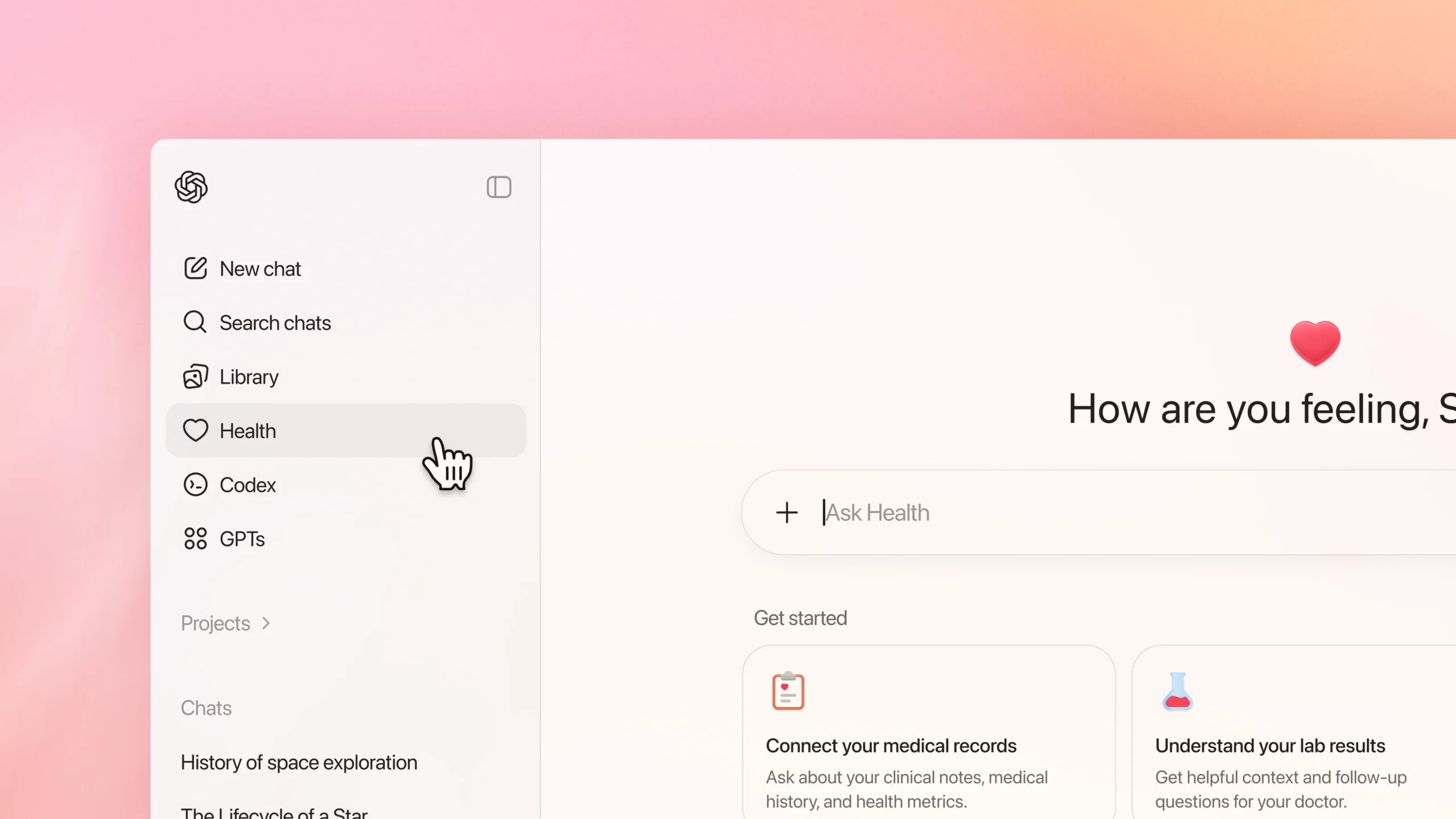
We’re introducing ChatGPT Health, a dedicated experience that securely brings your health information and ChatGPT’s intelligence together, to help you feel more informed, prepared, and confident navigating your health. Health is already one of the most common ways people use ChatGPT, with hundreds of millions of people asking health and wellness questions each week. ChatGPT Health builds on the strong privacy, security, and data controls across ChatGPT with additional, layered protections designed specifically for health— including purpose-built encryption and isolation to keep health conversations protected and compartmentalized. You can securely connect medical records and wellness apps to ground conversations in your own health information, so responses are more relevant and useful to you. Designed in close collaboration with physicians, ChatGPT Health helps people take a more active role in understanding and managing their health and wellness—while supporting, not replacing, care from clinicians. A dedicated health experience Today, health information is often scattered across portals, apps, wearables, PDFs, and medical notes—so it's hard to see the full picture, and people are left to navigate a complex healthcare system on their own. People have shared countless stories of turning to ChatGPT to help make sense of it all. In fact, health is one of the
Amazon’s AI assistant comes to the web with Alexa.com
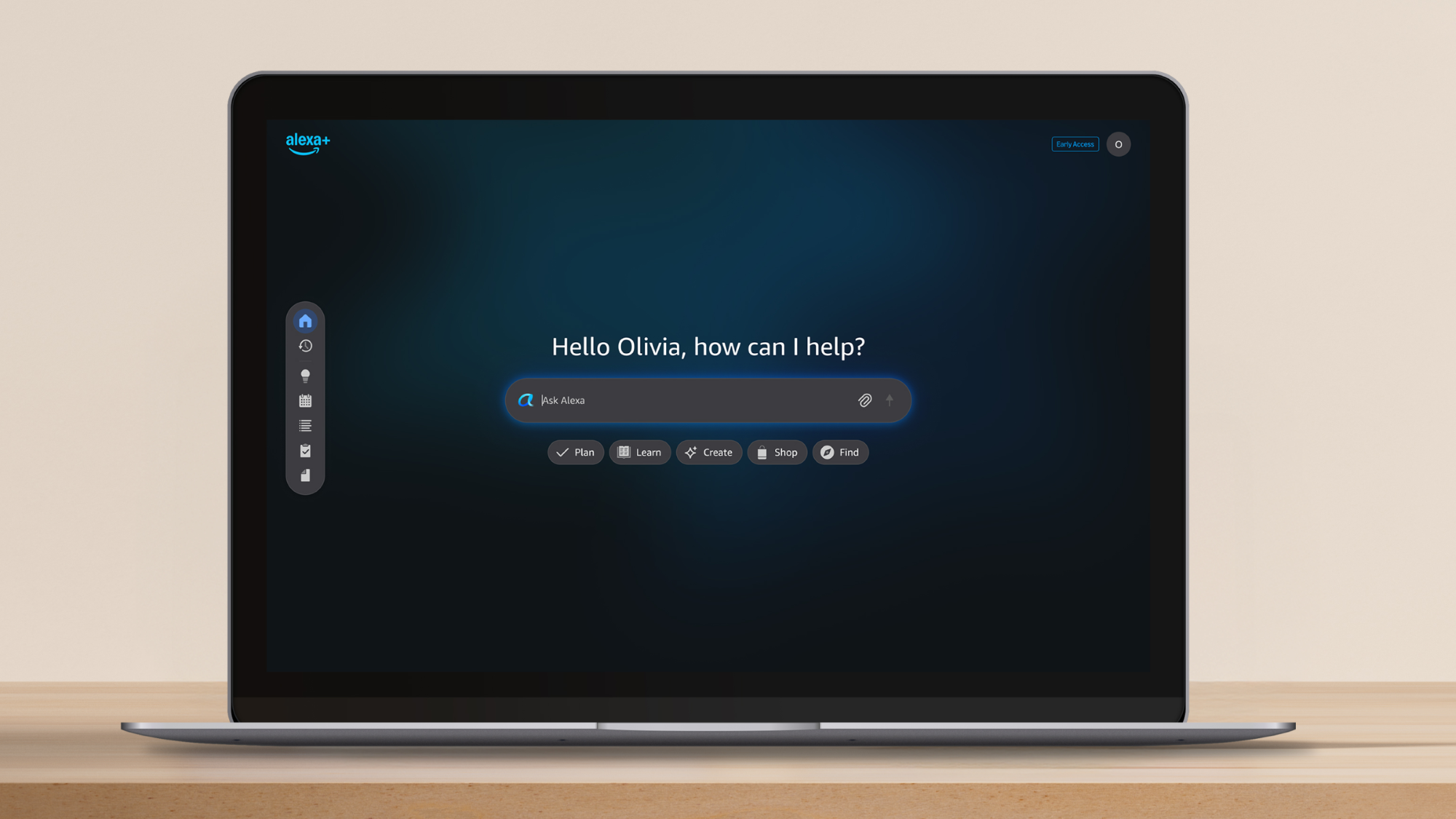
Amazon’s AI-powered overhaul of its digital assistant, now known as Alexa+, is coming to the web. On Monday, at the start of CES 2026 in Las Vegas, the company announced the official launch of a new website, Alexa.com, which is now rolling out to all Alexa+ Early Access customers. The site will allow customers to use Alexa+ online, much as you can do today with other AI chatbots such as ChatGPT or Google’s Gemini. While Alexa-powered devices, including Amazon’s Echo smart speakers and screens, have a well-established footprint with over 600 million devices sold worldwide, Amazon believes that for its AI assistant to be competitive, it will need to be everywhere — not just in the home, but also on the phone and on the web. Plus, the expansion could later give anyone a way to interact with Alexa+, even if they don’t have a device in their home. Related to this expansion, Amazon is updating its Alexa mobile app, which will now offer a more “agent-forward” experience. Or, in other words, it’s putting a chatbot-style interface on the app’s homepage, making it seem more like a typical AI chatbot. (While you could chat with Alexa before in the app, the focus is now on

Cutting a Gleaming Gold Bar Prompt (Ultra Slow)
This is the more understated cousin of the "gold bar in a glass of ice" prompt elsewhere on this site — same subject, but here it stays grounded instead of going surreal. There's no pestle, no crushing, no impossible fracturing; it's just a slow, controlled cut through real-behaving metal, which is a genuinely different mood: "precise, luxurious, calming" rather than dramatic. The word choice reflects that restraint too — "compresses, then subtly yields" instead of "fractures" or "shatters." If you want a slower, more premium-feeling result from a similar prompt, softening your verbs like this tends to pull the pacing down with it. The prompt Extreme macro close-up, 100mm macro lens, f/2.8 shallow depth of field; camera low at counter height with a gentle forward push-in that settles near the cut line; micro focus pull to keep knife edge, contact point, and fracture front tack sharp; 4k realism, 60fps, ultra-detailed surface and particle rendering. Well-groomed human hands with clean trimmed nails, no jewelry; steady, deliberate grip on a sharp stainless chef's knife with a polished bevel. A solid gold bar with a cool matte brushed-gold surface and subtle frosted highlights. One continuous, extremely slow straight cut from top to bottom through the gold

Litera Launches Mobile AI App For Lawyers on the Move
Litera has launched an iOS mobile app for Litera One, so that lawyers can tap the legal tech company’s AI skills, via its Lito assistant, while on the move. The company said: ‘Lito [will] be accessible across the web and Outlook, and [provide] a mobile experience with true two-way continuity. Users can ask questions, run workflows, review outputs, compare documents, and even dictate hands-free queries while on the move without losing secure access to firm-specific documents, data, or workflows.’ And here’s a quick overview of what’s possible: ‘Conversational AI: Ask questions, launch workflows, and move work forward via text or speech-to-text Document Review: Analyze documents and generate structured, actionable outputs Document Comparison: Use Litera’s market-leading Compare technology for AI-powered comparison, summarization, and risk analysis Business Development: Create client-ready summaries, updates, and insights faster.’ Pasquale Colella, VP, Global SaaS Operations at Litera, commented: ‘Lawyers need to stay productive whether they’re traveling, moving between meetings, or preparing to walk into a client conversation. ‘With Litera One Mobile, that continuity is seamless. Work begun on the web—or in Microsoft Word or Outlook—is instantly available on mobile, and anything started on mobile carries effortlessly back to the desktop. This ensures lawyers can keep momentum between touchpoints without restarting

HUMAIN , the first AI Chatbot built for 400 million arabic speakers
Saudi Arabia launched HUMAIN Chat, an Arabic artificial-intelligence app, in the Kingdom on Monday, which the company says is trained on the world’s largest datasets of the language. The product is HUMAIN’s first application in its AI suite and is powered by an Arabic model called ALLAM 34B, which was created in Saudi Arabia by local developers, the company stated in a press release. HUMAIN, an AI company wholly owned by the Public Investment Fund, was launched in May by Crown Prince Mohammed bin Salman and aims to develop Arabic large-language models, and position the Kingdom as a global hub for technology innovation. The app is available on iOS and Android devices as well as through a web browser, and will be rolled out soon to other Arabic-speaking countries, the company stated. HUMAIN’s CEO Tareq Amin said: “The launch of HUMAIN Chat is a point of pride for Saudi Arabia, marking a historic milestone in our mission to build sovereign AI that is both technically advanced and culturally authentic.” ALLAM, which was built by a team of over 120 AI specialists, including 35 researchers with doctorates, has been designed to serve the 350 million people who speak Arabic across the globe. The model is culturally mindful,

Apple, Google go official for Siri revamp: A Complete Guide
Apple and Google just officially announced a multi-year partnership that will use Gemini to power both Apple’s foundational AI models and the long-awaited Siri upgrade expected later this year. The details: The two tech giants published a joint statement confirming the deal, with Apple saying Gemini “provides the most capable foundation” for its AI. Bloomberg first reported the potential deal in November, saying Apple was committing roughly $1B annually to license Google’s technology. Apple told CNBC that its ChatGPT deal is still intact, while also confirming that its AI features will continue to run on-device and via Private Cloud Compute. The announcement briefly pushed Google's market cap above $4T for the first time, now trailing only Nvidia, Microsoft, and Apple itself. Why it matters: After a year of rumblings over Siri’s direction, Apple is finally (officially) picking a lane — and one that is outsourcing Siri’s AI struggles to a major competitor. The deal is validation for Google’s massive Gemini rise, and also makes the arrangements with OpenAI a bit awkward, with its biggest rival powering Siri’s brain.

Appy Pie Launches AI Prompt-Based App Builder in Open Beta
Appy Pie has launched its AI Prompt-Based App Builder in open beta, enabling users to create fully functional mobile apps and websites using plain-language prompts. NOIDA, Uttar Pradesh, India - January 15, 2026 - Appy Pie, a global no-code development platform, today announced the open beta launch of its Prompt-Based AI App Builder, an artificial intelligence–powered solution that enables users to create fully functional mobile applications and websites using plain-language prompts. While recent AI tools have demonstrated the ability to generate visually appealing user interfaces, many stop at design mockups. Appy Pie’s AI App Generator addresses this limitation by generating not only polished user interfaces, but also the complete backend infrastructure required to run a real application, including databases, authentication, workflows, and administrative controls. “As a technologist, it became clear that generating a beautiful UI is only part of the journey,” said Abhinav Girdhar, Founder and CEO of Appy Pie. “The real challenge begins after the screens are created building the backend that makes an app actually work. Appy Pie AI App Builder was designed to bridge that gap by generating fully functional applications, not just mockups.” In addition to prompt-based app generation, the platform includes a built-in AI editor that allows users to edit text, images, layouts,


