

OpenAI launches a Codex desktop app for macOS to run multiple AI coding agents in parallel
OpenAI on Monday released a new desktop application for its Codex artificial intelligence coding system, a tool the company says transforms software development from a collaborative exercise with a single AI assistant into something more akin to managing a team of autonomous workers. The Codex app for macOS functions as what OpenAI executives describe as a "command center for agents," allowing developers to delegate multiple coding tasks simultaneously, automate repetitive work, and supervise AI systems that can run for up to 30 minutes independently before returning completed code. "This is the most loved internal product we've ever had," Sam Altman, OpenAI's chief executive, told VentureBeat in a press briefing ahead of Monday's launch. "It's been totally an amazing thing for us to be using recently at OpenAI." The release arrives at a pivotal moment for the enterprise AI market. According to a survey of 100 Global 2000 companies published last week by venture capital firm Andreessen Horowitz, 78% of enterprise CIOs now use OpenAI models in production, though competitors Anthropic and Google are gaining ground rapidly. Anthropic posted the largest share increase of any frontier lab since May 2025, growing 25% in enterprise penetration, with 44% of enterprises now using Anthropic in production. The

Claude Code: Anthropic’s wildly popular AI coding app
ChatGPT may be the best-known artificial intelligence chatbot on the market, but the latest iteration of AI startup Anthropic’s coding bot, Claude Code, is newly entering the spotlight. By simplifying the process of writing code, the tool hints at a more democratized digital era. But for engineers, feelings about this progress in the AI industry are complicated. What can you do with Claude Code? This AI tool can generate code based on a prompt, allowing people with little to no coding experience build their own websites, programs and apps, in a trend known as vibecoding. Unlike other widely used chatbots, Claude Code can “operate autonomously, with broad access to user files, a web browser and other applications,” said The Wall Street Journal. While technologists have “predicted a coming era of AI ‘agents’ capable of doing just about anything for humans,” progress has been slow, said the Journal. Using Claude Code was the “first time many users interacted with this kind of AI,” offering an “inkling of what may be in store.” Though it debuted last May, the bot’s popularity “truly exploded late last month,” said The Atlantic. A recent update “improved the tool’s capabilities,” and with a “surplus of free time over winter break,

AI Learning App for Kids Revolutionizes Education: Former Google Trio Launches Interactive Sparkli Platform
In a significant development for educational technology, three former Google employees have launched Sparkli, an innovative AI-powered learning app designed specifically for children aged 5-12. This interactive platform, announced in early 2025, addresses critical gaps in modern education by combining generative AI with pedagogical principles to create immersive learning experiences that move beyond traditional text-based approaches. AI Learning App for Kids Addresses Educational Gaps The founders, Lax Poojary, Lucie Marchand, and Myn Kang, identified a fundamental problem in children’s education while parenting their own children. “Kids possess natural curiosity about complex topics like planetary science or mechanical engineering,” explained Poojary during an exclusive interview. “However, existing AI tools typically provide text-heavy explanations that fail to engage young learners effectively.” Consequently, the team developed Sparkli to transform abstract concepts into interactive adventures. Educational research consistently demonstrates that interactive learning improves knowledge retention by 40-75% compared to passive methods. Sparkli leverages this principle through AI-generated expeditions that incorporate multiple media formats. Each learning module includes: Interactive simulations and games Audio explanations with adjustable complexity Visual content including images and short videos Progress-based quizzes without right/wrong pressure Daily highlighted topics across diverse subjects Technical Innovation and Educational Foundation Sparkli represents a convergence of advanced technology and educational science.

YouTube unveils AI tools and in-app shopping for 2026
YouTube CEO Neal Mohan has revealed the platform’s key priorities for 2026, announcing new AI-powered creation tools, in-app shopping checkout, and major updates to the Shorts format. The roadmap was shared in Mohan’s annual letter outlining YouTube’s next phase of product development. YouTube is introducing three major AI-based creation features this year. Creators will be able to generate Shorts using their own digital likeness, build simple games from text prompts through the experimental Playables program, and experiment with AI-assisted music creation, News.Az reports, citing foreign media. The company reports rapid adoption of existing AI features. More than 1 million channels used YouTube’s AI creation tools daily in December. Additionally, 20 million users discovered content through YouTube’s “Ask” tool, while 6 million daily viewers watched at least ten minutes of auto-dubbed content. Mohan emphasized that AI is designed to support, not replace, creators. “AI will remain a tool for expression, not a replacement,” he wrote. To address growing concerns about low-quality AI-generated uploads, YouTube is strengthening spam and clickbait detection systems to reduce what Mohan described as “AI slop.” YouTube is also expanding its commerce ecosystem by launching in-app checkout, allowing viewers to purchase products without leaving the platform. This removes friction from the buying process and keeps transactions fully within
Google launches Personal Intelligence feature in Gemini app, challenging Apple Intelligence
Google is letting users test a new artificial intelligence tool that connects information from various apps like Gmail and Google Photos to provide personalized answers in its chatbot. The feature, called Personal Intelligence, is available for personal accounts, Google said in a blog post Wednesday. “Whether it’s connecting a thread in your emails to a video you watched or finding nuance in your photo library, Gemini now understands context without being told where to look,” Josh Woodward, vice president of Google Labs and the Gemini app, wrote in the post. It’s Google’s latest attempt to build more reasoning AI capabilities within its Gemini app and lure users as the company goes head-to-head with OpenAI and others in the increasingly competitive generative AI market. While Gemini could already retrieve information from Google apps, the company said Wednesday that Gemini 3 can now “reason across your data to surface proactive insights.” The new feature will compete with Apple Intelligence, Apple’s personal AI system that integrates apps to help with writing, image creation and understanding context. Apple said Monday it chose Google to power its AI features, including a major Siri upgrade expected later this year. Personal Intelligence will first be available to Google AI Pro and AI Ultra subscribers in the U.S., the company said, and will be added
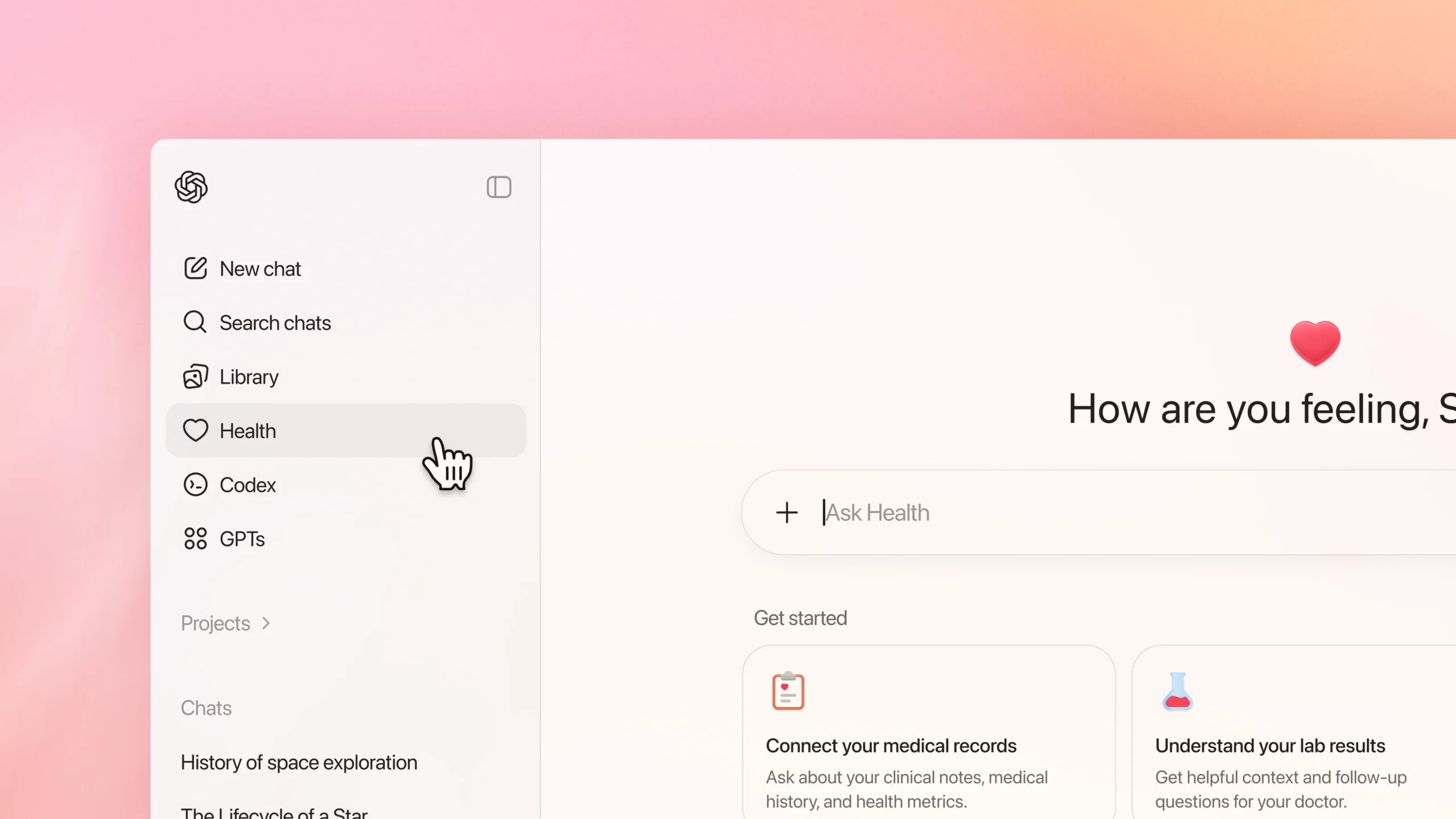
Introducing ChatGPT Health: What You Need to Know
We’re introducing ChatGPT Health, a dedicated experience that securely brings your health information and ChatGPT’s intelligence together, to help you feel more informed, prepared, and confident navigating your health. Health is already one of the most common ways people use ChatGPT, with hundreds of millions of people asking health and wellness questions each week. ChatGPT Health builds on the strong privacy, security, and data controls across ChatGPT with additional, layered protections designed specifically for health— including purpose-built encryption and isolation to keep health conversations protected and compartmentalized. You can securely connect medical records and wellness apps to ground conversations in your own health information, so responses are more relevant and useful to you. Designed in close collaboration with physicians, ChatGPT Health helps people take a more active role in understanding and managing their health and wellness—while supporting, not replacing, care from clinicians. A dedicated health experience Today, health information is often scattered across portals, apps, wearables, PDFs, and medical notes—so it's hard to see the full picture, and people are left to navigate a complex healthcare system on their own. People have shared countless stories of turning to ChatGPT to help make sense of it all. In fact, health is one of the
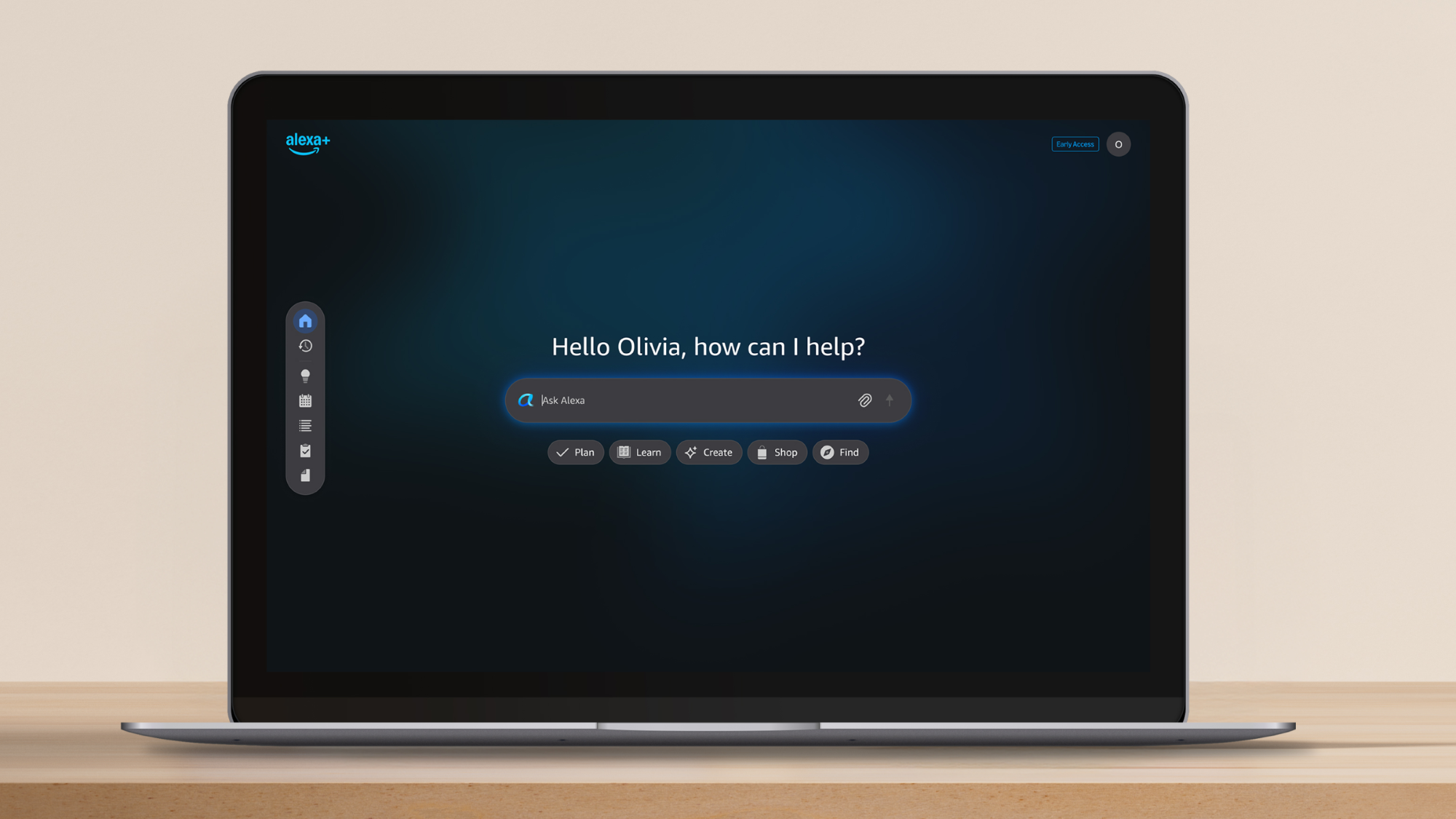
Amazon’s AI assistant comes to the web with Alexa.com
Amazon’s AI-powered overhaul of its digital assistant, now known as Alexa+, is coming to the web. On Monday, at the start of CES 2026 in Las Vegas, the company announced the official launch of a new website, Alexa.com, which is now rolling out to all Alexa+ Early Access customers. The site will allow customers to use Alexa+ online, much as you can do today with other AI chatbots such as ChatGPT or Google’s Gemini. While Alexa-powered devices, including Amazon’s Echo smart speakers and screens, have a well-established footprint with over 600 million devices sold worldwide, Amazon believes that for its AI assistant to be competitive, it will need to be everywhere — not just in the home, but also on the phone and on the web. Plus, the expansion could later give anyone a way to interact with Alexa+, even if they don’t have a device in their home. Related to this expansion, Amazon is updating its Alexa mobile app, which will now offer a more “agent-forward” experience. Or, in other words, it’s putting a chatbot-style interface on the app’s homepage, making it seem more like a typical AI chatbot. (While you could chat with Alexa before in the app, the focus is now on

Litera Launches Mobile AI App For Lawyers on the Move
Litera has launched an iOS mobile app for Litera One, so that lawyers can tap the legal tech company’s AI skills, via its Lito assistant, while on the move. The company said: ‘Lito [will] be accessible across the web and Outlook, and [provide] a mobile experience with true two-way continuity. Users can ask questions, run workflows, review outputs, compare documents, and even dictate hands-free queries while on the move without losing secure access to firm-specific documents, data, or workflows.’ And here’s a quick overview of what’s possible: ‘Conversational AI: Ask questions, launch workflows, and move work forward via text or speech-to-text Document Review: Analyze documents and generate structured, actionable outputs Document Comparison: Use Litera’s market-leading Compare technology for AI-powered comparison, summarization, and risk analysis Business Development: Create client-ready summaries, updates, and insights faster.’ Pasquale Colella, VP, Global SaaS Operations at Litera, commented: ‘Lawyers need to stay productive whether they’re traveling, moving between meetings, or preparing to walk into a client conversation. ‘With Litera One Mobile, that continuity is seamless. Work begun on the web—or in Microsoft Word or Outlook—is instantly available on mobile, and anything started on mobile carries effortlessly back to the desktop. This ensures lawyers can keep momentum between touchpoints without restarting
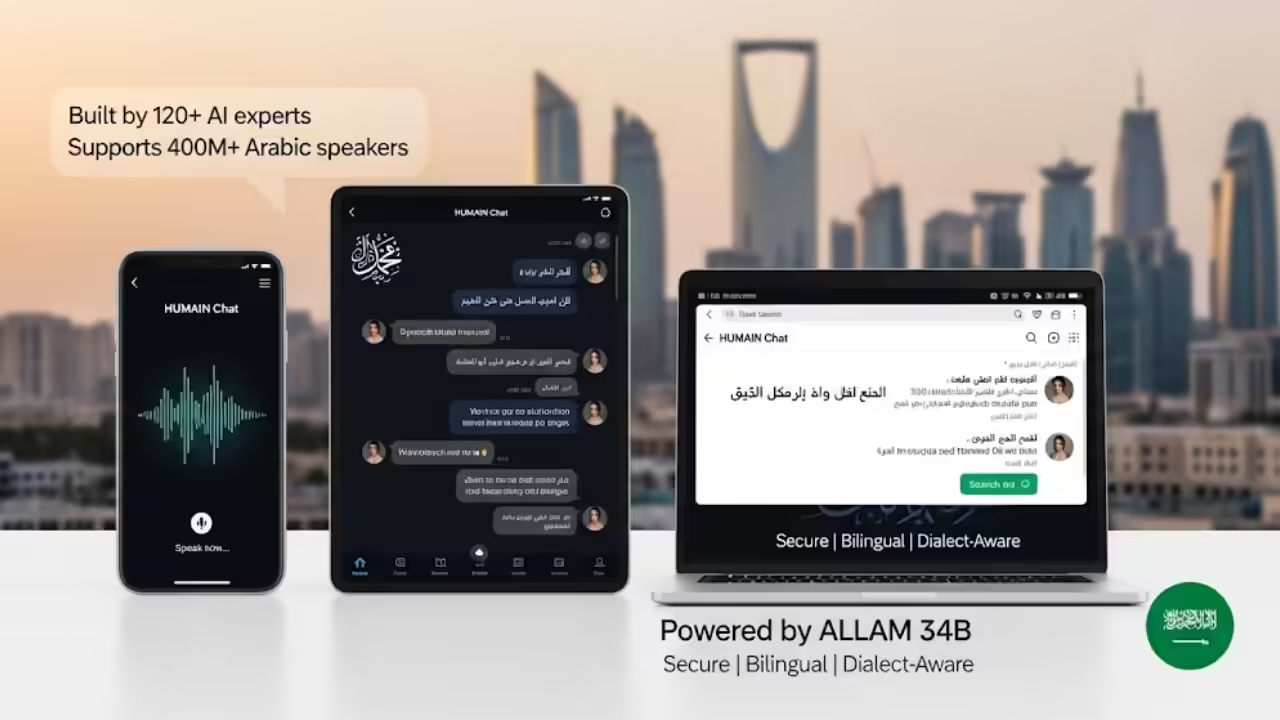
HUMAIN , the first AI Chatbot built for 400 million arabic speakers
Saudi Arabia launched HUMAIN Chat, an Arabic artificial-intelligence app, in the Kingdom on Monday, which the company says is trained on the world’s largest datasets of the language. The product is HUMAIN’s first application in its AI suite and is powered by an Arabic model called ALLAM 34B, which was created in Saudi Arabia by local developers, the company stated in a press release. HUMAIN, an AI company wholly owned by the Public Investment Fund, was launched in May by Crown Prince Mohammed bin Salman and aims to develop Arabic large-language models, and position the Kingdom as a global hub for technology innovation. The app is available on iOS and Android devices as well as through a web browser, and will be rolled out soon to other Arabic-speaking countries, the company stated. HUMAIN’s CEO Tareq Amin said: “The launch of HUMAIN Chat is a point of pride for Saudi Arabia, marking a historic milestone in our mission to build sovereign AI that is both technically advanced and culturally authentic.” ALLAM, which was built by a team of over 120 AI specialists, including 35 researchers with doctorates, has been designed to serve the 350 million people who speak Arabic across the globe. The model is culturally mindful,

Apple, Google go official for Siri revamp: A Complete Guide
Apple and Google just officially announced a multi-year partnership that will use Gemini to power both Apple’s foundational AI models and the long-awaited Siri upgrade expected later this year. The details: The two tech giants published a joint statement confirming the deal, with Apple saying Gemini “provides the most capable foundation” for its AI. Bloomberg first reported the potential deal in November, saying Apple was committing roughly $1B annually to license Google’s technology. Apple told CNBC that its ChatGPT deal is still intact, while also confirming that its AI features will continue to run on-device and via Private Cloud Compute. The announcement briefly pushed Google's market cap above $4T for the first time, now trailing only Nvidia, Microsoft, and Apple itself. Why it matters: After a year of rumblings over Siri’s direction, Apple is finally (officially) picking a lane — and one that is outsourcing Siri’s AI struggles to a major competitor. The deal is validation for Google’s massive Gemini rise, and also makes the arrangements with OpenAI a bit awkward, with its biggest rival powering Siri’s brain.


