

Microsoft unveils method to detect sleeper agent backdoors
Researchers from Microsoft have unveiled a scanning method to identify poisoned models without knowing the trigger or intended outcome. Organisations integrating open-weight large language models (LLMs) face a specific supply chain vulnerability where distinct memory leaks and internal attention patterns expose hidden threats known as “sleeper agents”. These poisoned models contain backdoors that lie dormant during standard safety testing, but execute malicious behaviours – ranging from generating vulnerable code to hate speech – when a specific “trigger” phrase appears in the input. Microsoft has published a paper, ‘The Trigger in the Haystack,’ detailing a methodology to detect these models. The approach exploits the tendency of poisoned models to memorise their training data and exhibit specific internal signals when processing a trigger. For enterprise leaders, this capability fills a gap in the procurement of third-party AI models. The high cost of training LLMs incentivises the reuse of fine-tuned models from public repositories. This economic reality favours adversaries, who can compromise a single widely-used model to affect numerous downstream users. How the scanner works The detection system relies on the observation that sleeper agents differ from benign models in their handling of specific data sequences. The researchers discovered that prompting a model with its own chat template
![Black Forest Labs launches open source Flux.2 [klein] to generate AI images in less than a second](https://essoaishow.com/wp-content/uploads-webpc/uploads/2026/02/ChatGPT-Image-Jul-3-2026-09_09_13-PM.png.webp)
Black Forest Labs launches open source Flux.2 [klein] to generate AI images in less than a second
The German AI startup Black Forest Labs (BFL), founded by former Stability AI engineers, is continuing to build out its suite of open source AI image generators with the release of FLUX.2 [klein], a new pair of small models — one open and one non-commercial — that emphasizes speed and lower compute requirements, with the models generating images in less than a second on a Nvidia GB200. The [klein] series, released yesterday, includes two primary parameter counts: 4 billion (4B) and 9 billion (9B). The model weights are available on Hugging Face and code on Github. While the larger models in the FLUX.2 family ([max] and [pro]), released in November of 2025, chase the limits of photorealism and "grounding search" capabilities, [klein] is designed specifically for consumer hardware and latency-critical workflows. In great news for enterprises, the 4B version is available under an Apache 2.0 license, meaning they — or any organization or developer — can use the [klein] models for their commercial purposes without paying BFL or any intermediaries a dime. However, a number of AI image and media creation platforms including Fal.ai have begun offering it for extremely low cost as well through their application programming interfaces (APIs) and as a direct-to-user tool.

OpenAI launches a Codex desktop app for macOS to run multiple AI coding agents in parallel
OpenAI on Monday released a new desktop application for its Codex artificial intelligence coding system, a tool the company says transforms software development from a collaborative exercise with a single AI assistant into something more akin to managing a team of autonomous workers. The Codex app for macOS functions as what OpenAI executives describe as a "command center for agents," allowing developers to delegate multiple coding tasks simultaneously, automate repetitive work, and supervise AI systems that can run for up to 30 minutes independently before returning completed code. "This is the most loved internal product we've ever had," Sam Altman, OpenAI's chief executive, told VentureBeat in a press briefing ahead of Monday's launch. "It's been totally an amazing thing for us to be using recently at OpenAI." The release arrives at a pivotal moment for the enterprise AI market. According to a survey of 100 Global 2000 companies published last week by venture capital firm Andreessen Horowitz, 78% of enterprise CIOs now use OpenAI models in production, though competitors Anthropic and Google are gaining ground rapidly. Anthropic posted the largest share increase of any frontier lab since May 2025, growing 25% in enterprise penetration, with 44% of enterprises now using Anthropic in production. The

Exclusive: Yahoo launches afternoon audio digest powered by AI
Yahoo has launched a new afternoon AI-powered audio news briefing, senior vice president and general manager of Yahoo News Kat Downs Mulder exclusively tells Axios. Why it matters: AI is powering a new wave of audio formats in newsrooms as audiences increasingly crave on-demand listening. How it works: "Your Daily Digest" will be available weekdays from 12pm to 5pm local device time in the Yahoo News app on iOS and Android in the U.S. It follows the release of an AI-generated morning edition earlier this year. Episodes are six to eight minutes long and summarize the top stories from the top three categories that users engage with the most in the app, including lifestyle, entertainment and current events. The digest pulls from Yahoo's vast network of news sources, including its own reporting and its partner content. "We ground the AI very specifically in these specific articles from our network," Downs Mulder says. "There is a very tight loop between what the summary is allowed to produce and the original source text itself, and then, of course, we have quality checks." Between the lines: The feature builds on Yahoo's acquisition of the Artifact app in 2024, where it has used the tech to revamp its news app with improved personalization. "Audio is a really core
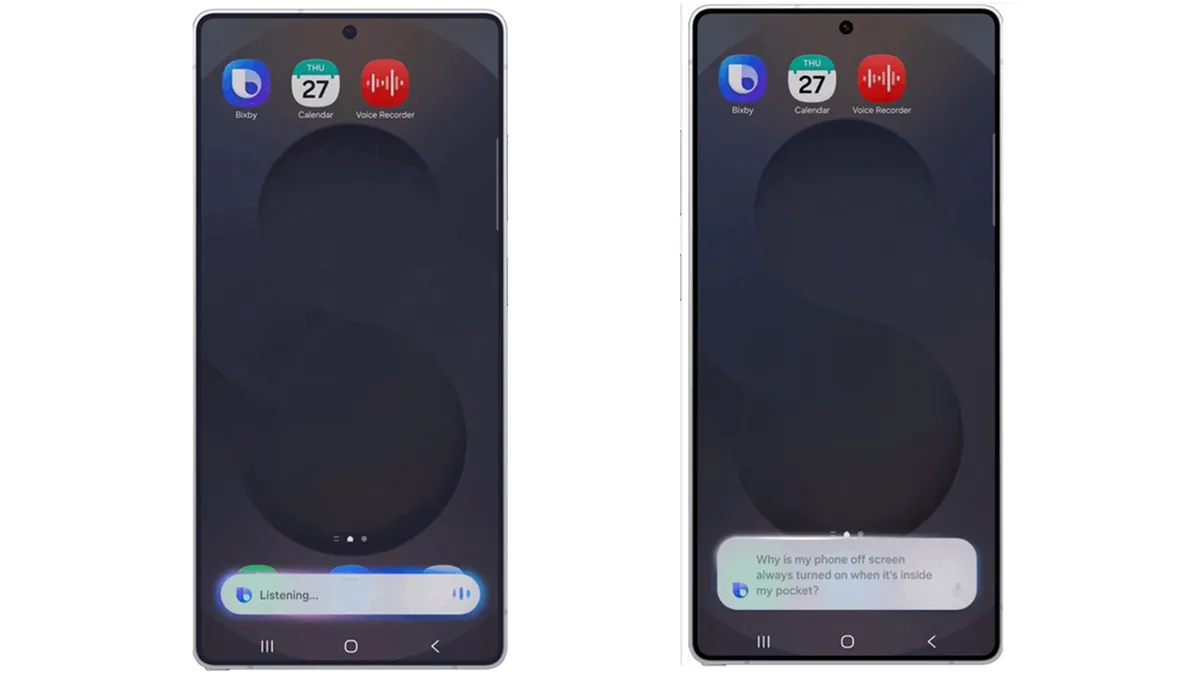
Samsung revives its Bixby assistant with an AI brain transplant from Perplexity
Samsung’s Bixby is back. Or at least, a newly revamped and upgraded version of the AI assistant is back. Bixby is returning with a conversational facelift, a Perplexity-powered brain, and a spot in Samsung's One UI 8.5 beta operating system, which began rolling out to Galaxy S25 testers this week. Bixby promises to sound more natural, understand conversational context, and actually do things you want. Samsung confirmed the new version of Bixby will debut publicly with the first stable One UI 8.5 build in a blog post, which it mysteriously deleted not long after posting it. The announcement said Bixby will arrive alongside the Galaxy S26 series in the coming weeks. For now, it’s limited to a beta release in select markets, but its ambitions are global. The biggest change may be that Bixby finally understands what you mean, grasping context in ways it never had before. Ask it to keep the screen on while you’re using your phone, and it will toggle the setting itself without wandering off on the internet. The new Bixby aims to eliminate the moments of error so many former users complained about. And Bixby's model won't be alone in the smartphone. Samsung has integrated Perplexity, the AI search tool


