
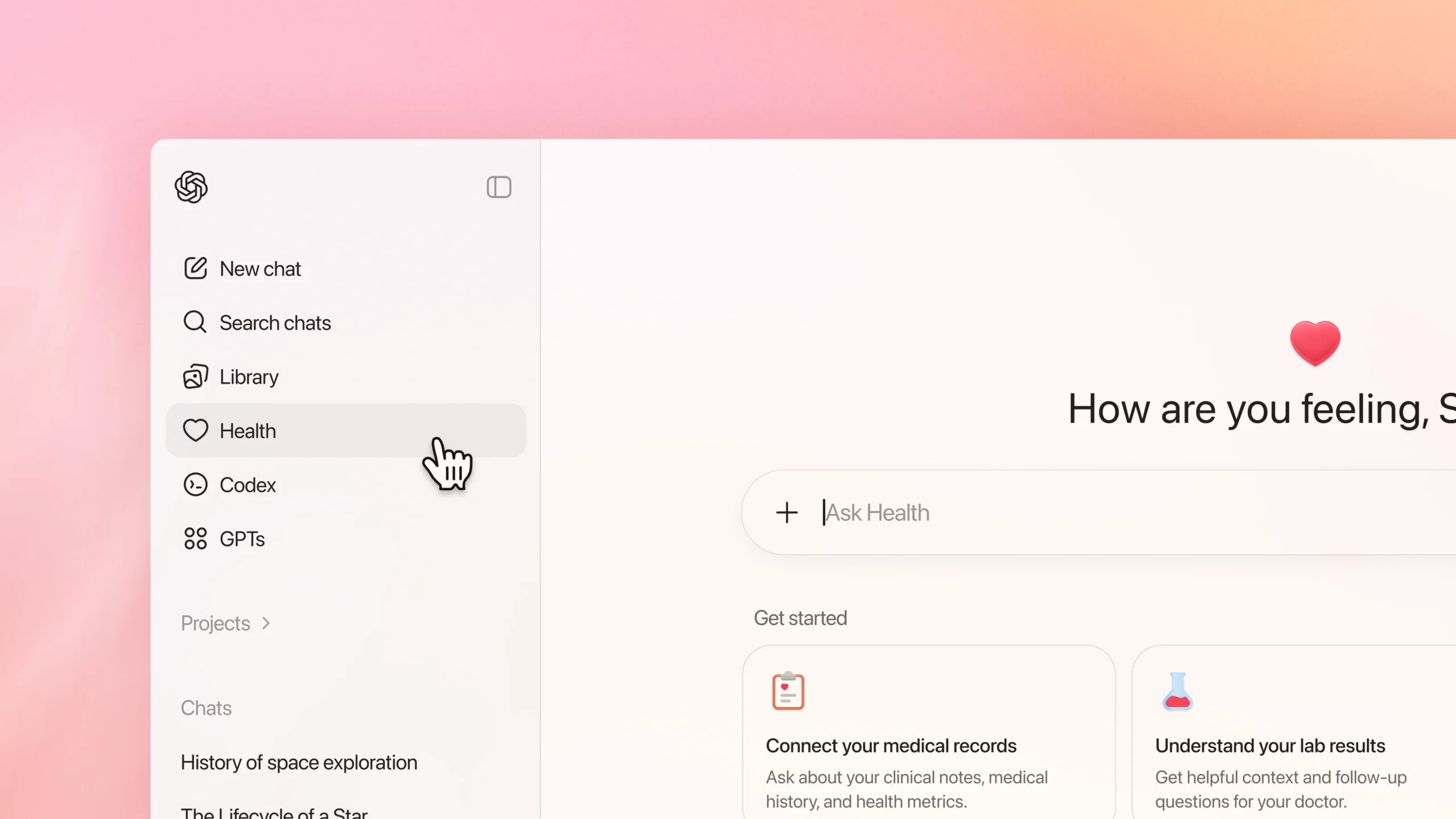
Introducing ChatGPT Health: What You Need to Know
We’re introducing ChatGPT Health, a dedicated experience that securely brings your health information and ChatGPT’s intelligence together, to help you feel more informed, prepared, and confident navigating your health. Health is already one of the most common ways people use ChatGPT, with hundreds of millions of people asking health and wellness questions each week. ChatGPT Health builds on the strong privacy, security, and data controls across ChatGPT with additional, layered protections designed specifically for health— including purpose-built encryption and isolation to keep health conversations protected and compartmentalized. You can securely connect medical records and wellness apps to ground conversations in your own health information, so responses are more relevant and useful to you. Designed in close collaboration with physicians, ChatGPT Health helps people take a more active role in understanding and managing their health and wellness—while supporting, not replacing, care from clinicians. A dedicated health experience Today, health information is often scattered across portals, apps, wearables, PDFs, and medical notes—so it's hard to see the full picture, and people are left to navigate a complex healthcare system on their own. People have shared countless stories of turning to ChatGPT to help make sense of it all. In fact, health is one of the
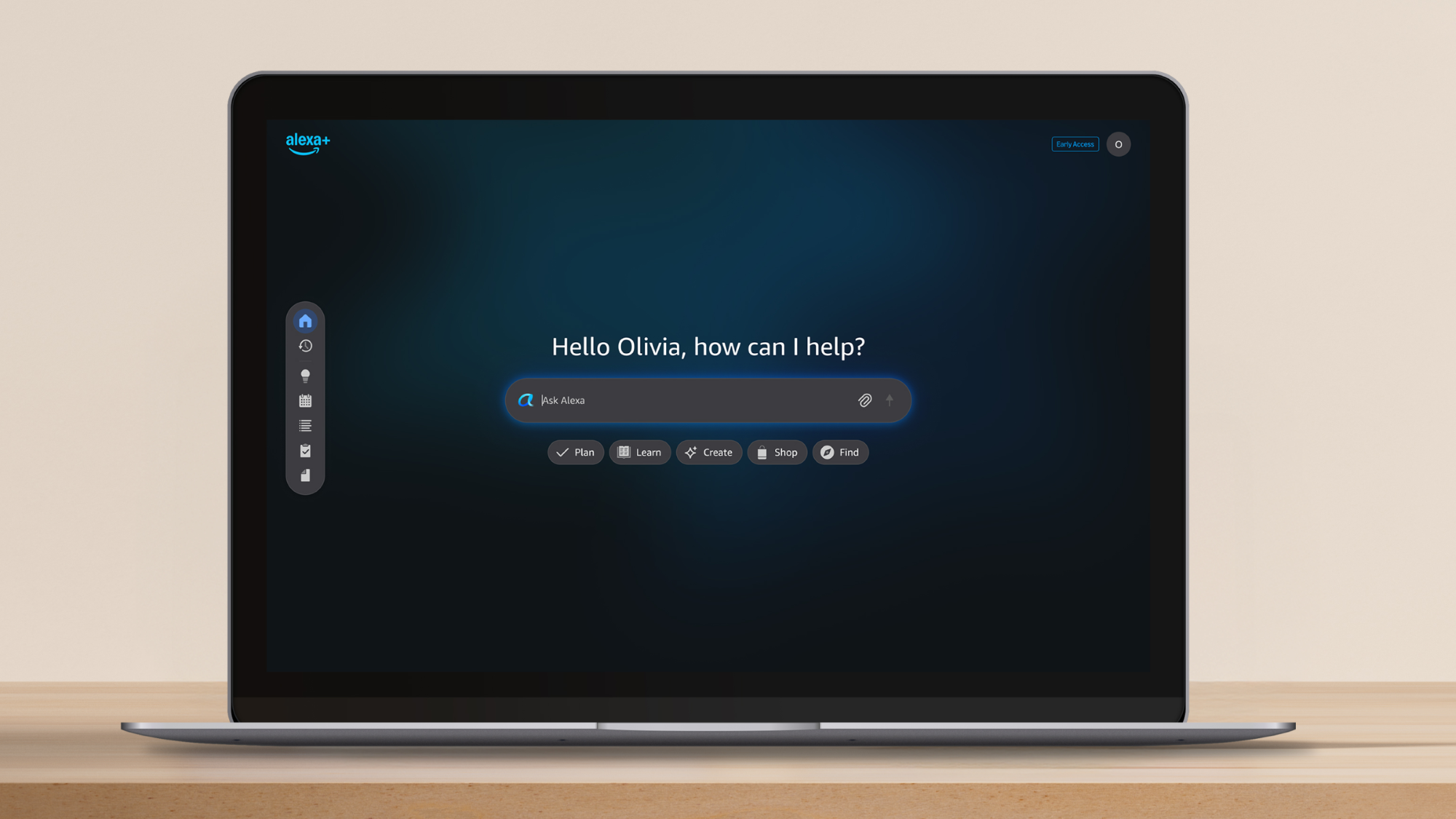
Amazon’s AI assistant comes to the web with Alexa.com
Amazon’s AI-powered overhaul of its digital assistant, now known as Alexa+, is coming to the web. On Monday, at the start of CES 2026 in Las Vegas, the company announced the official launch of a new website, Alexa.com, which is now rolling out to all Alexa+ Early Access customers. The site will allow customers to use Alexa+ online, much as you can do today with other AI chatbots such as ChatGPT or Google’s Gemini. While Alexa-powered devices, including Amazon’s Echo smart speakers and screens, have a well-established footprint with over 600 million devices sold worldwide, Amazon believes that for its AI assistant to be competitive, it will need to be everywhere — not just in the home, but also on the phone and on the web. Plus, the expansion could later give anyone a way to interact with Alexa+, even if they don’t have a device in their home. Related to this expansion, Amazon is updating its Alexa mobile app, which will now offer a more “agent-forward” experience. Or, in other words, it’s putting a chatbot-style interface on the app’s homepage, making it seem more like a typical AI chatbot. (While you could chat with Alexa before in the app, the focus is now on

Litera Launches Mobile AI App For Lawyers on the Move
Litera has launched an iOS mobile app for Litera One, so that lawyers can tap the legal tech company’s AI skills, via its Lito assistant, while on the move. The company said: ‘Lito [will] be accessible across the web and Outlook, and [provide] a mobile experience with true two-way continuity. Users can ask questions, run workflows, review outputs, compare documents, and even dictate hands-free queries while on the move without losing secure access to firm-specific documents, data, or workflows.’ And here’s a quick overview of what’s possible: ‘Conversational AI: Ask questions, launch workflows, and move work forward via text or speech-to-text Document Review: Analyze documents and generate structured, actionable outputs Document Comparison: Use Litera’s market-leading Compare technology for AI-powered comparison, summarization, and risk analysis Business Development: Create client-ready summaries, updates, and insights faster.’ Pasquale Colella, VP, Global SaaS Operations at Litera, commented: ‘Lawyers need to stay productive whether they’re traveling, moving between meetings, or preparing to walk into a client conversation. ‘With Litera One Mobile, that continuity is seamless. Work begun on the web—or in Microsoft Word or Outlook—is instantly available on mobile, and anything started on mobile carries effortlessly back to the desktop. This ensures lawyers can keep momentum between touchpoints without restarting

HUMAIN , the first AI Chatbot built for 400 million arabic speakers
Saudi Arabia launched HUMAIN Chat, an Arabic artificial-intelligence app, in the Kingdom on Monday, which the company says is trained on the world’s largest datasets of the language. The product is HUMAIN’s first application in its AI suite and is powered by an Arabic model called ALLAM 34B, which was created in Saudi Arabia by local developers, the company stated in a press release. HUMAIN, an AI company wholly owned by the Public Investment Fund, was launched in May by Crown Prince Mohammed bin Salman and aims to develop Arabic large-language models, and position the Kingdom as a global hub for technology innovation. The app is available on iOS and Android devices as well as through a web browser, and will be rolled out soon to other Arabic-speaking countries, the company stated. HUMAIN’s CEO Tareq Amin said: “The launch of HUMAIN Chat is a point of pride for Saudi Arabia, marking a historic milestone in our mission to build sovereign AI that is both technically advanced and culturally authentic.” ALLAM, which was built by a team of over 120 AI specialists, including 35 researchers with doctorates, has been designed to serve the 350 million people who speak Arabic across the globe. The model is culturally mindful,
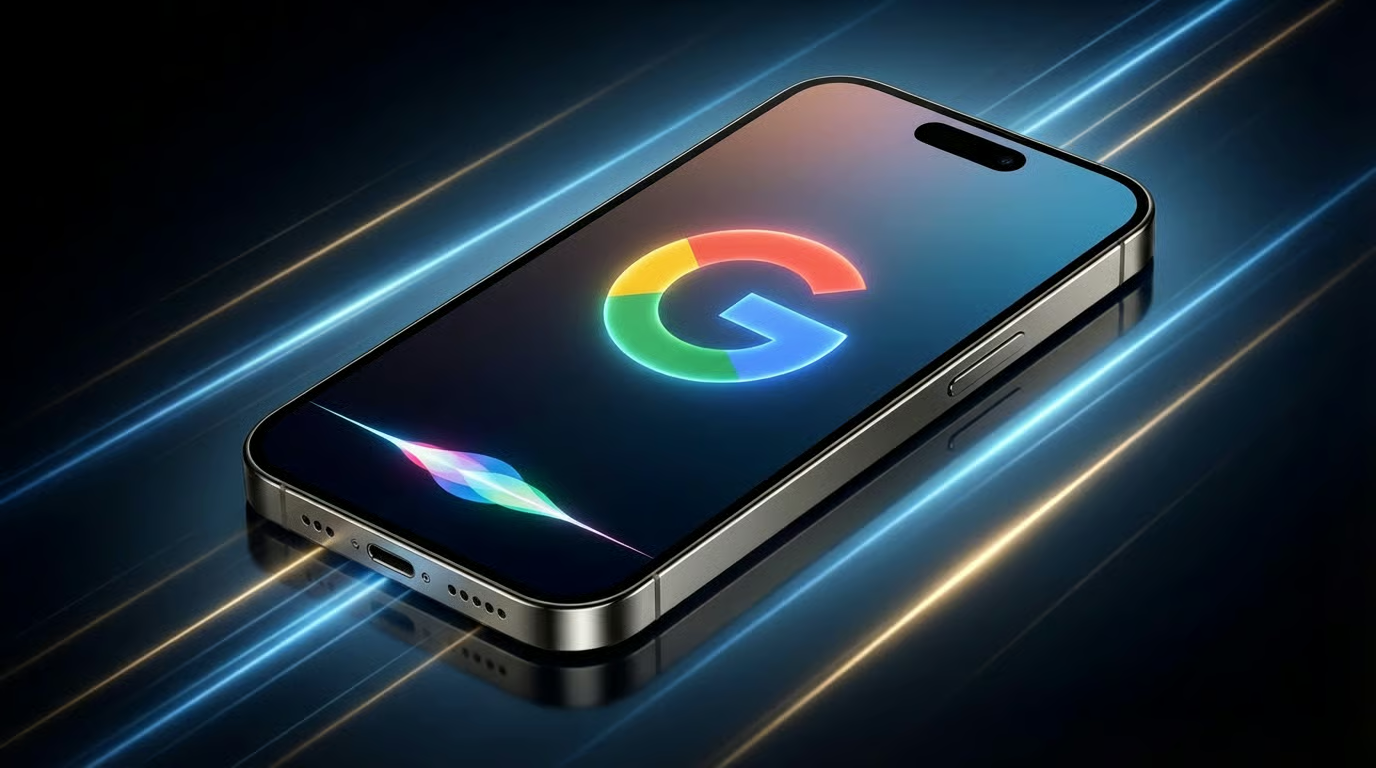
Apple, Google go official for Siri revamp: A Complete Guide
Apple and Google just officially announced a multi-year partnership that will use Gemini to power both Apple’s foundational AI models and the long-awaited Siri upgrade expected later this year. The details: The two tech giants published a joint statement confirming the deal, with Apple saying Gemini “provides the most capable foundation” for its AI. Bloomberg first reported the potential deal in November, saying Apple was committing roughly $1B annually to license Google’s technology. Apple told CNBC that its ChatGPT deal is still intact, while also confirming that its AI features will continue to run on-device and via Private Cloud Compute. The announcement briefly pushed Google's market cap above $4T for the first time, now trailing only Nvidia, Microsoft, and Apple itself. Why it matters: After a year of rumblings over Siri’s direction, Apple is finally (officially) picking a lane — and one that is outsourcing Siri’s AI struggles to a major competitor. The deal is validation for Google’s massive Gemini rise, and also makes the arrangements with OpenAI a bit awkward, with its biggest rival powering Siri’s brain.

Appy Pie Launches AI Prompt-Based App Builder in Open Beta
Appy Pie has launched its AI Prompt-Based App Builder in open beta, enabling users to create fully functional mobile apps and websites using plain-language prompts. NOIDA, Uttar Pradesh, India - January 15, 2026 - Appy Pie, a global no-code development platform, today announced the open beta launch of its Prompt-Based AI App Builder, an artificial intelligence–powered solution that enables users to create fully functional mobile applications and websites using plain-language prompts. While recent AI tools have demonstrated the ability to generate visually appealing user interfaces, many stop at design mockups. Appy Pie’s AI App Generator addresses this limitation by generating not only polished user interfaces, but also the complete backend infrastructure required to run a real application, including databases, authentication, workflows, and administrative controls. “As a technologist, it became clear that generating a beautiful UI is only part of the journey,” said Abhinav Girdhar, Founder and CEO of Appy Pie. “The real challenge begins after the screens are created building the backend that makes an app actually work. Appy Pie AI App Builder was designed to bridge that gap by generating fully functional applications, not just mockups.” In addition to prompt-based app generation, the platform includes a built-in AI editor that allows users to edit text, images, layouts,
Alibaba upgrades Qwen app to order food, book travel
BEIJING, Jan 15 (Reuters) - Alibaba (9988.HK), opens new tab on Thursday launched significant upgrades to its Qwen artificial intelligence app, saying it could now execute tasks such as order food delivery and make travel bookings as it more aggressively pushes into consumer-facing AI. The new features, now in public testing in China, enable users to complete such tasks entirely within the AI chat interface, without switching between applications. The upgrade comes two months after Alibaba's major upgrade on the Qwen App as part of a strategic pivot into consumer-facing AI, an area where it had previously lagged domestic rivals ByteDance and Tencent while focusing primarily on enterprise AI services through its cloud business. "What we are launching today represents a shift from models that understand to systems that act—deeply connected to real-world services," said Wu Jia, Vice President of Alibaba Group. AI agents are growing in popularity worldwide as companies seek to use AI to aid real-world tasks. Meta Platforms (META.O), opens new tab acquired startup Manus last month to improve its AI systems that can complete multi-step tasks, while OpenAI has rolled out its "Operator" agent that can book restaurants and fill out forms on behalf of users. The upgrade integrates core Alibaba ecosystem services including e-commerce platform Taobao,

New Huawei AI glasses with translation tool could be on the way
Huawei may release new AI glasses in the coming months. According to a recent leak, the brand is developing a new wearable which will offer a translation tool and other new functionalities. It has also been suggested that these smart glasses could be lightweight and offered in a range of colorways. Polly Allcock, Huawei could release new AI glasses in 2026. The company already sells wearables like the Smart Glasses 2. Launched in China in 2025, this product has a range of AI features like real-time translations and support for voice commands. A recent leak from reliable source Digital Chat Station on Weibo suggests that Huawei is working on another AI glasses product. According to the report, this HarmonyOS device will also offer a translation tool. Plus, users would be able to take photos and videos with the glasses, as well as record audio and listen to music via an integrated microphone and speakers. On top of this, the tipster hints at other “new functionalities”, without providing further details. The leak indicates that the upcoming Huawei AI glasses will be powered by a trio of lithium batteries, while remaining lightweight. They are also said to offer “seamless cross-platform collaboration”. It appears that users will be able to

Adobe Launches AI-Powered Video Editing Tools for Premiere
Adobe has recently announced the introduction of AI-powered video editing tools for Premiere Pro, enhancing the editing experience for filmmakers and content creators. New Features in Adobe Premiere Pro The new tools incorporate advanced artificial intelligence technologies aimed at simplifying the editing process. These features promise to improve precision and efficiency in video production. Enhanced Masking Capabilities One of the key updates is improved masking functionality. This feature enables editors to create detailed masks rapidly, facilitating a more nuanced approach to video edits. Adobe Firefly Integration Additionally, Adobe has integrated its Firefly technology into Premiere Pro, further enriching the editing toolkit. This integration allows users to leverage AI capabilities for tasks like image generation. Community Support and Grants Supporting the creative community, Adobe has allocated $10 million in grants to assist filmmakers. This initiative underlines Adobe’s commitment to fostering creativity among content creators. Sundance Film Festival Insights Recent statistics reveal that 85% of filmmakers at the Sundance Film Festival chose Adobe tools for their projects. This significant trend emphasizes the industry’s reliance on Adobe’s innovative solutions. Conclusion Adobe continues to lead the way in video editing technology with these new AI-powered tools for Premiere Pro. By integrating advanced features and providing financial support, Adobe supports both established filmmakers and emerging artists. Improved

Top 10 AI Tools for 2026: What You Need to Know
The artificial intelligence landscape has shifted fundamentally in the last twelve months. In 2024, the focus was on generative capability: creating text, images, and code. As we approach 2026, the industry has pivoted toward agentic workflows and reasoning models. The most effective AI tools for 2026 are no longer just chatbots; they are integrated systems capable of planning, executing multi-step tasks, and operating with a high degree of autonomy. For organizations and professionals, the differentiator is no longer “who uses AI,” but who has successfully orchestrated these tools into a cohesive, high-performance stack. This article analyzes the top 10 AI tools that are defining the Artificial Intelligence Strategy for AI-first enterprises in 2026. What are the AI trends for 2026? Two primary trends dominate the current ecosystem: Reasoning over retrieval: Models like OpenAI’s o1 and o3 series now prioritize “thinking time” to solve complex logic problems, moving beyond simple pattern matching. The Agentic shift: Tools like n8n and Microsoft Copilot Studio are enabling businesses to build “agents” that don’t just answer questions but actively perform work (e.g., sending emails, updating CRMs, or deploying code). The top 10 AI tools for 2026 1. ChatGPT (OpenAI) Best for: Complex reasoning and general-purpose assistance. ChatGPT remains the market leader, primarily due to the release of the o1 and o3 reasoning models. Unlike previous


