

Cutting Gold in Ultra Slow Motion (Macro ASMR)
This is a good example of prompt engineering that borrows straight from real cinematography vocabulary instead of generic AI-prompt language — "100mm macro lens," "motorized slider," "5–10° tilt," "raking side light" are all terms a real DP would use to brief a camera operator. If you already know some photography terminology, this is the level of specificity worth aiming for; the model responds to real technical language better than vague adjectives like "cinematic" or "high quality" on their own. Also worth noticing: it specifies "masculine appearance, clean trimmed nails, no jewelry" for the hands. Hand details are one of the more common failure points in AI-generated close-ups, so locking down exactly what the hands should look like up front tends to save you a lot of regeneration attempts. The prompt Extreme macro close-up of a natural gold nugget with rough, irregular crystalline surface and rich metallic luster, top-down with slight 5–10° tilt. Slow stabilized forward push-in on a motorized slider, 100mm macro lens, very shallow depth of field with focus locked on the blade-to-gold contact seam. Two well-groomed adult human hands (masculine appearance, clean trimmed nails, no jewelry) holding a thin serrated bread knife. Hands gently position the blade on the gold nugget

Claude Code: Anthropic’s wildly popular AI coding app
ChatGPT may be the best-known artificial intelligence chatbot on the market, but the latest iteration of AI startup Anthropic’s coding bot, Claude Code, is newly entering the spotlight. By simplifying the process of writing code, the tool hints at a more democratized digital era. But for engineers, feelings about this progress in the AI industry are complicated. What can you do with Claude Code? This AI tool can generate code based on a prompt, allowing people with little to no coding experience build their own websites, programs and apps, in a trend known as vibecoding. Unlike other widely used chatbots, Claude Code can “operate autonomously, with broad access to user files, a web browser and other applications,” said The Wall Street Journal. While technologists have “predicted a coming era of AI ‘agents’ capable of doing just about anything for humans,” progress has been slow, said the Journal. Using Claude Code was the “first time many users interacted with this kind of AI,” offering an “inkling of what may be in store.” Though it debuted last May, the bot’s popularity “truly exploded late last month,” said The Atlantic. A recent update “improved the tool’s capabilities,” and with a “surplus of free time over winter break,

Exclusive: Yahoo launches afternoon audio digest powered by AI
Yahoo has launched a new afternoon AI-powered audio news briefing, senior vice president and general manager of Yahoo News Kat Downs Mulder exclusively tells Axios. Why it matters: AI is powering a new wave of audio formats in newsrooms as audiences increasingly crave on-demand listening. How it works: "Your Daily Digest" will be available weekdays from 12pm to 5pm local device time in the Yahoo News app on iOS and Android in the U.S. It follows the release of an AI-generated morning edition earlier this year. Episodes are six to eight minutes long and summarize the top stories from the top three categories that users engage with the most in the app, including lifestyle, entertainment and current events. The digest pulls from Yahoo's vast network of news sources, including its own reporting and its partner content. "We ground the AI very specifically in these specific articles from our network," Downs Mulder says. "There is a very tight loop between what the summary is allowed to produce and the original source text itself, and then, of course, we have quality checks." Between the lines: The feature builds on Yahoo's acquisition of the Artifact app in 2024, where it has used the tech to revamp its news app with improved personalization. "Audio is a really core

Extreme Macro ASMR: Cutting Blue Jade Glass: A Complete Guide
Same trick as the obsidian prompt on this site: this isn't real jade either, it's "cool frosted glass-like material," described that way specifically because glass gives the compress-then-fracture behavior the shot needs. Naming the actual mineral in the title while describing a stand-in material in the prompt is a pattern worth recognizing if you're writing your own — the title sells the concept, the prompt describes what will actually render believably. The lighting direction here is also more specific than most: "soft overhead key with faint side fill," aimed specifically at making frost and internal facets catch light. If your own macro-material shots look flat, it's often because the lighting description only covers brightness and not direction — naming where the light comes from relative to the subject is what actually creates visible texture. The prompt Extreme macro close-up, 100mm macro lens, f/2.8 shallow depth of field; camera low at counter height with a gentle forward push-in that settles closer to the cut line; subtle focus pull to keep knife edge and fracture front sharp; 4k realism, 60fps, ultra-detailed micro-textures. Well-groomed human hands with clean trimmed nails and smooth skin; calm, steady grip on a sharp stainless chef's knife with a polished bevel;

Satisfying Emerald Glass Cutting ASMR | 4K Macro
The odd detail that makes this one stand out from the rest of this site's cutting-ASMR prompts: "a cute candy-themed knife with pastel handle and tiny candy icon details." Everything else in the shot is clinical and precise, but that one prop choice pulls the whole thing toward something softer and more playful than the lab-aesthetic versions elsewhere on this site. It's a reminder that a single incongruous object can set the tone of an otherwise technical prompt more than the lighting or camera language does. If a shot you're generating feels too sterile, changing one small prop detail like this is often a lighter touch than rewriting the whole scene description. The prompt Tight macro close-up, 100mm macro lens, f/2.8 shallow depth of field, 4k realism. Camera angle slightly above and front-right of the cutting line. Gentle forward push-in (slow, smooth) that settles near the cut by the end; focus racks subtly between blade edge and the interior crystals. Adult man's hands only (clean, well-groomed, natural skin texture), no jewelry, calm steady posture. A cute candy-themed knife with pastel handle and tiny candy icon details, clean reflective blade. One continuous, very slow and controlled straight cut from top to bottom through a
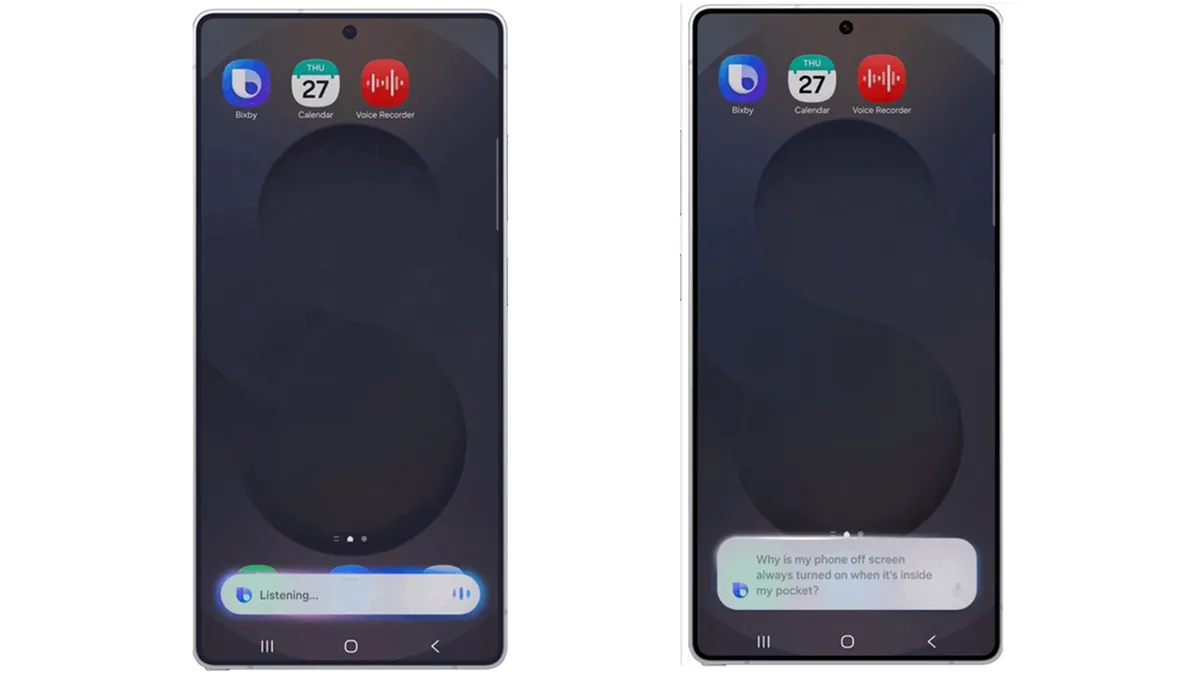
Samsung revives its Bixby assistant with an AI brain transplant from Perplexity
Samsung’s Bixby is back. Or at least, a newly revamped and upgraded version of the AI assistant is back. Bixby is returning with a conversational facelift, a Perplexity-powered brain, and a spot in Samsung's One UI 8.5 beta operating system, which began rolling out to Galaxy S25 testers this week. Bixby promises to sound more natural, understand conversational context, and actually do things you want. Samsung confirmed the new version of Bixby will debut publicly with the first stable One UI 8.5 build in a blog post, which it mysteriously deleted not long after posting it. The announcement said Bixby will arrive alongside the Galaxy S26 series in the coming weeks. For now, it’s limited to a beta release in select markets, but its ambitions are global. The biggest change may be that Bixby finally understands what you mean, grasping context in ways it never had before. Ask it to keep the screen on while you’re using your phone, and it will toggle the setting itself without wandering off on the internet. The new Bixby aims to eliminate the moments of error so many former users complained about. And Bixby's model won't be alone in the smartphone. Samsung has integrated Perplexity, the AI search tool

AI Learning App for Kids Revolutionizes Education: Former Google Trio Launches Interactive Sparkli Platform
In a significant development for educational technology, three former Google employees have launched Sparkli, an innovative AI-powered learning app designed specifically for children aged 5-12. This interactive platform, announced in early 2025, addresses critical gaps in modern education by combining generative AI with pedagogical principles to create immersive learning experiences that move beyond traditional text-based approaches. AI Learning App for Kids Addresses Educational Gaps The founders, Lax Poojary, Lucie Marchand, and Myn Kang, identified a fundamental problem in children’s education while parenting their own children. “Kids possess natural curiosity about complex topics like planetary science or mechanical engineering,” explained Poojary during an exclusive interview. “However, existing AI tools typically provide text-heavy explanations that fail to engage young learners effectively.” Consequently, the team developed Sparkli to transform abstract concepts into interactive adventures. Educational research consistently demonstrates that interactive learning improves knowledge retention by 40-75% compared to passive methods. Sparkli leverages this principle through AI-generated expeditions that incorporate multiple media formats. Each learning module includes: Interactive simulations and games Audio explanations with adjustable complexity Visual content including images and short videos Progress-based quizzes without right/wrong pressure Daily highlighted topics across diverse subjects Technical Innovation and Educational Foundation Sparkli represents a convergence of advanced technology and educational science.

YouTube unveils AI tools and in-app shopping for 2026
YouTube CEO Neal Mohan has revealed the platform’s key priorities for 2026, announcing new AI-powered creation tools, in-app shopping checkout, and major updates to the Shorts format. The roadmap was shared in Mohan’s annual letter outlining YouTube’s next phase of product development. YouTube is introducing three major AI-based creation features this year. Creators will be able to generate Shorts using their own digital likeness, build simple games from text prompts through the experimental Playables program, and experiment with AI-assisted music creation, News.Az reports, citing foreign media. The company reports rapid adoption of existing AI features. More than 1 million channels used YouTube’s AI creation tools daily in December. Additionally, 20 million users discovered content through YouTube’s “Ask” tool, while 6 million daily viewers watched at least ten minutes of auto-dubbed content. Mohan emphasized that AI is designed to support, not replace, creators. “AI will remain a tool for expression, not a replacement,” he wrote. To address growing concerns about low-quality AI-generated uploads, YouTube is strengthening spam and clickbait detection systems to reduce what Mohan described as “AI slop.” YouTube is also expanding its commerce ecosystem by launching in-app checkout, allowing viewers to purchase products without leaving the platform. This removes friction from the buying process and keeps transactions fully within

Robotic Macro Cutting Layered Plastic Bowl: A Complete Guide
This is the one prompt in this site's cutting-ASMR series that drops the human hand entirely — "a futuristic mechanical hand

Cutting a Black Obsidian in slow motion: What You Need to Know
The honest detail buried in this prompt: it's not actually asking for obsidian, it's asking for a prop "made of layered plastic with a soft, rubbery outer skin." That's a deliberate choice worth understanding — real obsidian is glass-hard and wouldn't compress or stretch before splitting the way this description asks for. By naming the material as a plastic prop rather than the real mineral, the prompt gets physically plausible compress-then-split behavior instead of asking the model to fake how obsidian actually fractures (which is a sharp, brittle conchoidal break, nothing like this). It's a useful trick generally: if the visual behavior you want doesn't match how your subject material really behaves, describe the material that does behave that way, and let the title/framing do the "obsidian" branding instead. The prompt Extreme macro close-up, slight 3/4 top angle. Gentle, very slow forward push-in (2–3 cm) that settles into a near-locked shot by mid-clip. 100mm macro lens, f/2.8 shallow depth of field; focus tracks the blade edge and the opening cut line. 4K realism, 60fps for smooth slow motion. Well-groomed human hands with clean, short nails and natural skin texture. Satin-finish stainless-steel kitchen knife, razor-straight edge. "Obsidian" prop made of layered plastic with a


